
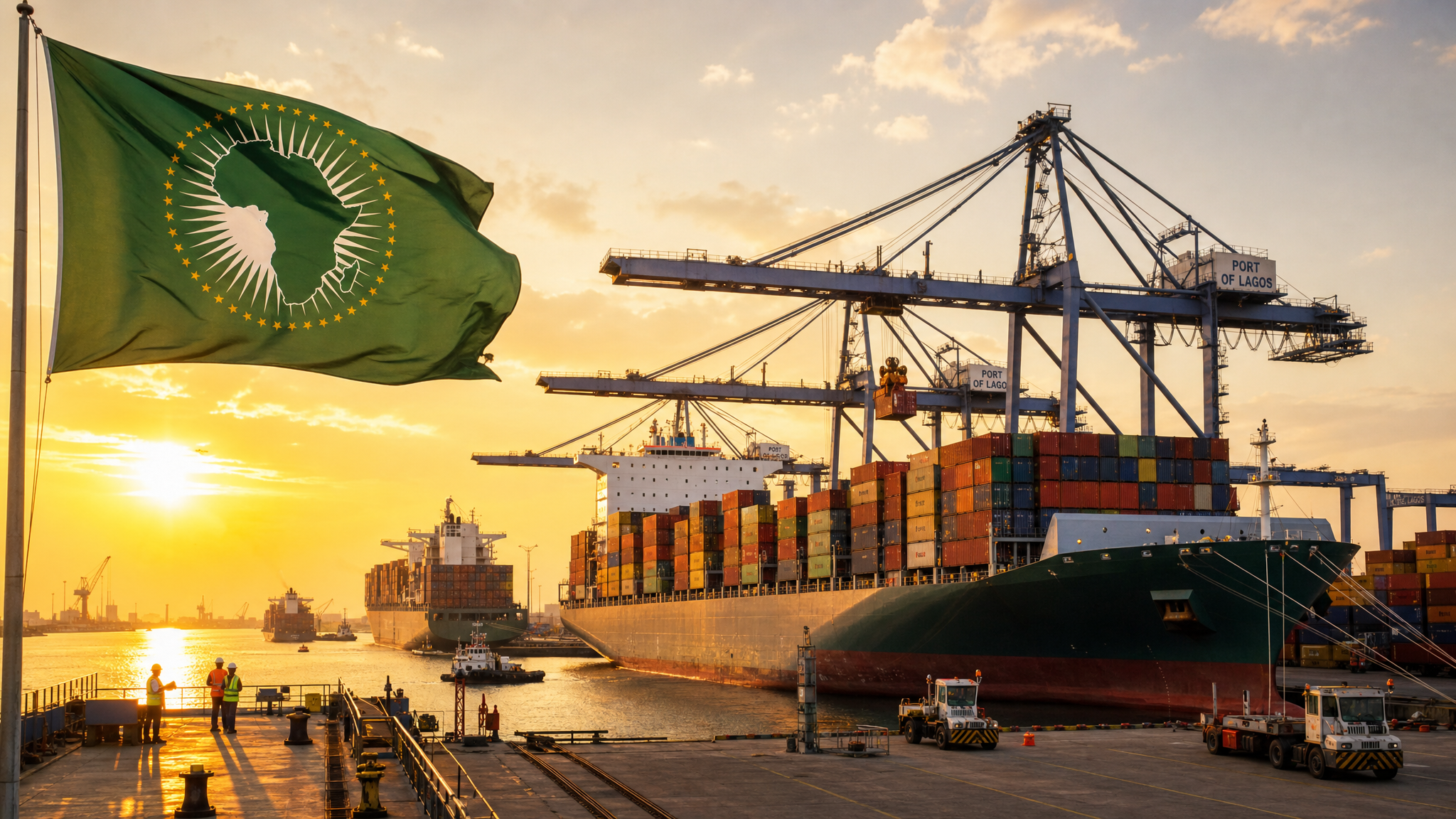
The African Continental Free Trade Area (AfCFTA) is no longer a theoretical exercise. With 50 ratifications, 92.4% of Rules of Origin finalised, and the Guided Trade Initiative facilitating actual shipments between Kenya, South Africa, and Ghana, the agreement has crossed the threshold from aspiration to operational reality.
Afreximbank projects intra-African trade will grow 10% in 2026, reaching $230 billion. The share of intra-African trade in total continental trade is expected to rise to 16%, with manufacturing and agri-food sectors accounting for nearly half of these flows. These are significant numbers — but they also highlight how far Africa has to go. For comparison, intra-European trade represents roughly 60% of EU total trade.
The Operational Architecture
Five core instruments now underpin the AfCFTA's practical execution:
- Rules of Origin: Completed and approved by the AU Assembly in February 2026, these determine which goods qualify for preferential tariff treatment.
- Tariff Concessions: The framework for graduated tariff reduction across member states.
- Non-Tariff Barrier (NTB) Mechanism: An online platform for monitoring and eliminating barriers — customs delays, regulatory inconsistencies, port inefficiencies — that often matter more than tariffs.
- Pan-African Payment and Settlement System (PAPSS): The payment rail designed to enable cross-border transactions in local currencies, potentially reducing FX costs by 20–30%.
- African Trade Observatory: A data platform tracking trade flows, compliance, and market opportunities.
The Infrastructure Constraint
The AfCFTA's ambition collides with a physical reality: Africa's infrastructure deficit makes intra-continental trade structurally more expensive than trade with external partners. Shipping a container from Mombasa to Lagos can cost more than shipping the same container from Mombasa to Shanghai.
This is why the corridor projects — Lobito (Angola-DRC-Zambia), Nacala (Malawi-Mozambique-Zambia), and the Lamu-Isiolo-Garissa Highway (Kenya-Ethiopia-South Sudan) — are not just infrastructure investments. They are trade enablers that directly determine whether AfCFTA's tariff liberalisation translates into actual goods movement.
The SME Question
SMEs account for over 98% of market players across the continent. The AfCFTA Secretariat has made inclusive trade a priority, specifically through the Protocol on Women and Youth in Trade — the first legal instrument of its kind globally. But SME participation depends on trade finance availability, and Africa's trade finance gap remains estimated at $81 billion annually.
This is where the intersection of fintech and trade policy becomes critical. Digital trade finance platforms, combined with PAPSS settlement rails, could dramatically reduce the cost and complexity of cross-border SME transactions. The companies building this intersection — trade finance fintechs with AfCFTA compliance built in — represent one of the most compelling investment themes on the continent.
Outlook
A high-level committee chaired by Kenyan President William Ruto was established in February 2026 to accelerate implementation. The political will exists. The legal architecture is largely complete. The binding constraint is now execution: can member states actually reduce tariffs on schedule, can PAPSS achieve critical mass, and can the corridor infrastructure be delivered before the tariff advantage dissipates?
For capital allocators, the AfCFTA is not a single investment thesis — it's a lens through which every African cross-border transaction should be evaluated. The question is no longer whether Africa will integrate; it's how fast, and who captures the value.