
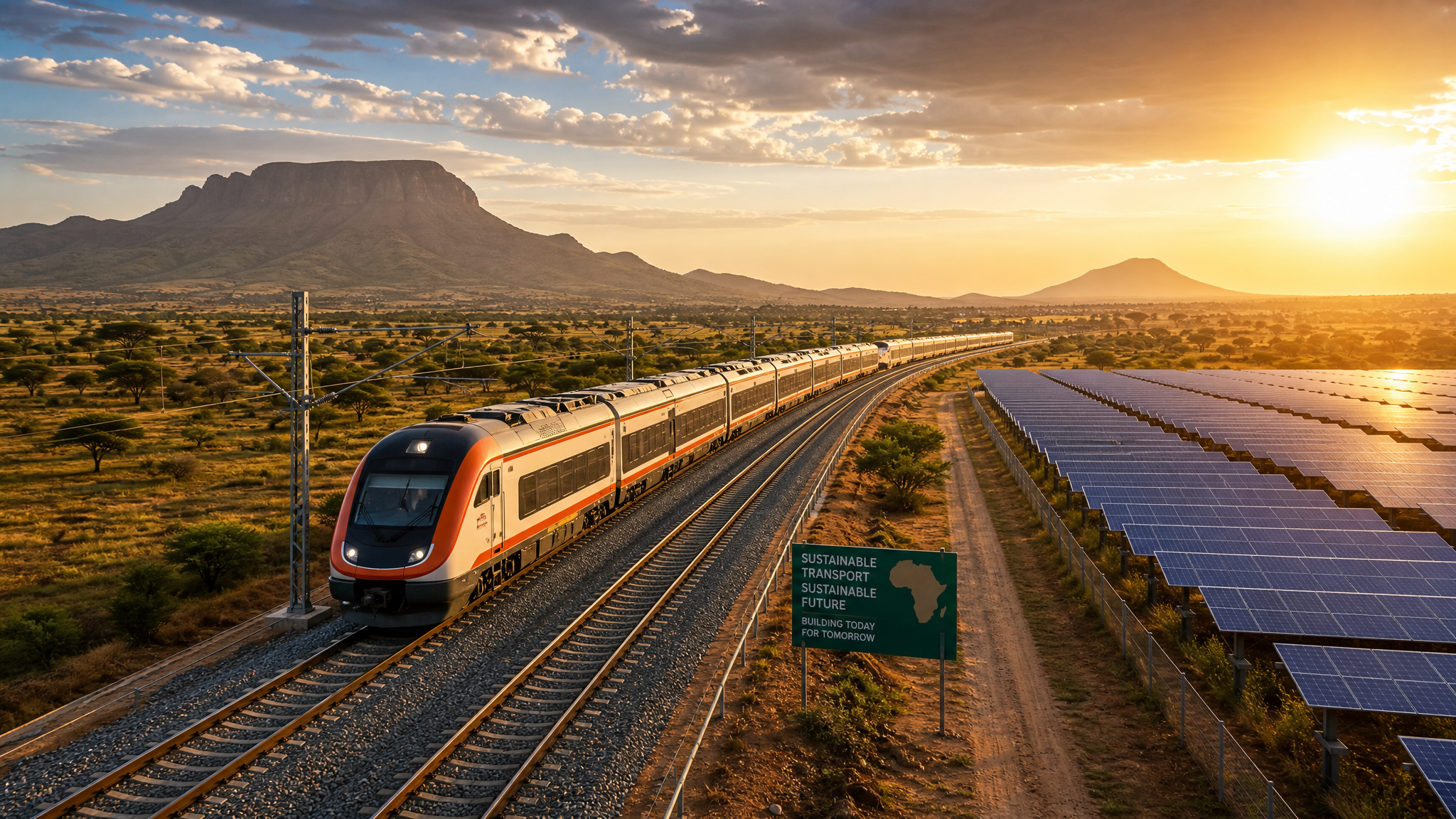
A structural shift is underway in how Africa's infrastructure gets financed. European and multilateral development finance institutions — Norfund, BII, the EDFI network — have largely retreated from early-stage venture equity in favour of senior debt and mezzanine facilities. The rationale is straightforward: patient, non-dilutive capital deployed to revenue-generating businesses delivers more attractive risk-adjusted returns in a high-interest-rate environment, with lower governance overhead.
For the infrastructure sector specifically, this pivot aligns with a maturation cycle. The continent's pipeline is no longer dominated by greenfield concept-stage projects. Increasingly, the deals getting done are refinancings, expansions, and structured acquisitions of operating assets — all of which suit debt instruments better than equity.
The Landmark Deals of 2025–26
The Africa Finance Corporation (AFC) has emerged as the continent's most active infrastructure financier, with a portfolio that illustrates the scale and diversity of current deal flow:
- Baomahun Gold Project: $330 million in senior debt financing for a West African mining operation — notable for its entirely African-led capital structure.
- Kano-Maradi Railway: A $2 billion cross-border rail project connecting Nigeria and Niger, designed to open up landlocked Sahelian economies to coastal trade infrastructure.
- Lobito Corridor: The $553 million DFC-backed rail link from Angola's Atlantic coast to the DRC-Zambia copperbelt — arguably the single most strategically important infrastructure project in sub-Saharan Africa.
The Sovereign Wealth Fund Catalyst
A parallel development is the rapid expansion of African sovereign wealth funds as anchor investors in infrastructure. Guinea is launching its first SWF in Q2 2026, targeting $1 billion in initial capital backed by Simandou iron-ore revenues. Ethiopian Investment Holdings manages approximately $45 billion. Egypt's Sovereign Fund is pursuing a strategy to double managed assets.
The emerging model is "asymmetric co-investment": the SWF takes a subordinated equity position to de-risk the project, enabling private and institutional capital to enter at senior tranches with acceptable risk-return profiles. This structure is being refined in partnership with Gulf-based sovereign funds — particularly Mubadala and ADIA — creating a South-South capital corridor that bypasses traditional Western DFI channels.
The Missing Middle
The DFI pivot to debt has created an unintended consequence: the $1–5 million equity gap for infrastructure-adjacent startups. Local venture funds that relied on DFI cornerstone investments are losing their anchor LPs. The result is a polarised funding landscape — large-scale, asset-heavy projects attract abundant capital, while the innovation layer (construction tech, logistics optimisation, modular energy, climate adaptation) struggles to raise growth-stage equity.
This gap is not just a venture capital problem. Infrastructure projects depend on an ecosystem of smaller companies — surveying firms, environmental consultants, logistics providers, maintenance operators — that need growth capital to scale alongside the projects they serve. Without this ecosystem, even well-funded megaprojects face execution risk from local capacity constraints.
Where the Opportunity Sits
Africa's domestic savings pool is estimated at $1.1 trillion — a figure that highlights the continent's potential to self-finance a significant portion of its infrastructure needs. The challenge is intermediation: connecting domestic capital (pension funds, insurance companies, diaspora remittances) with bankable infrastructure projects through appropriate vehicles.
For international capital allocators, the opportunity is increasingly in structured credit rather than equity: project finance facilities, infrastructure bonds, and blended finance instruments that offer DFI-quality returns with diversified African exposure. The operators who understand both the deal structuring and the local execution environment will capture the most value in what is becoming the world's last great infrastructure build-out.