
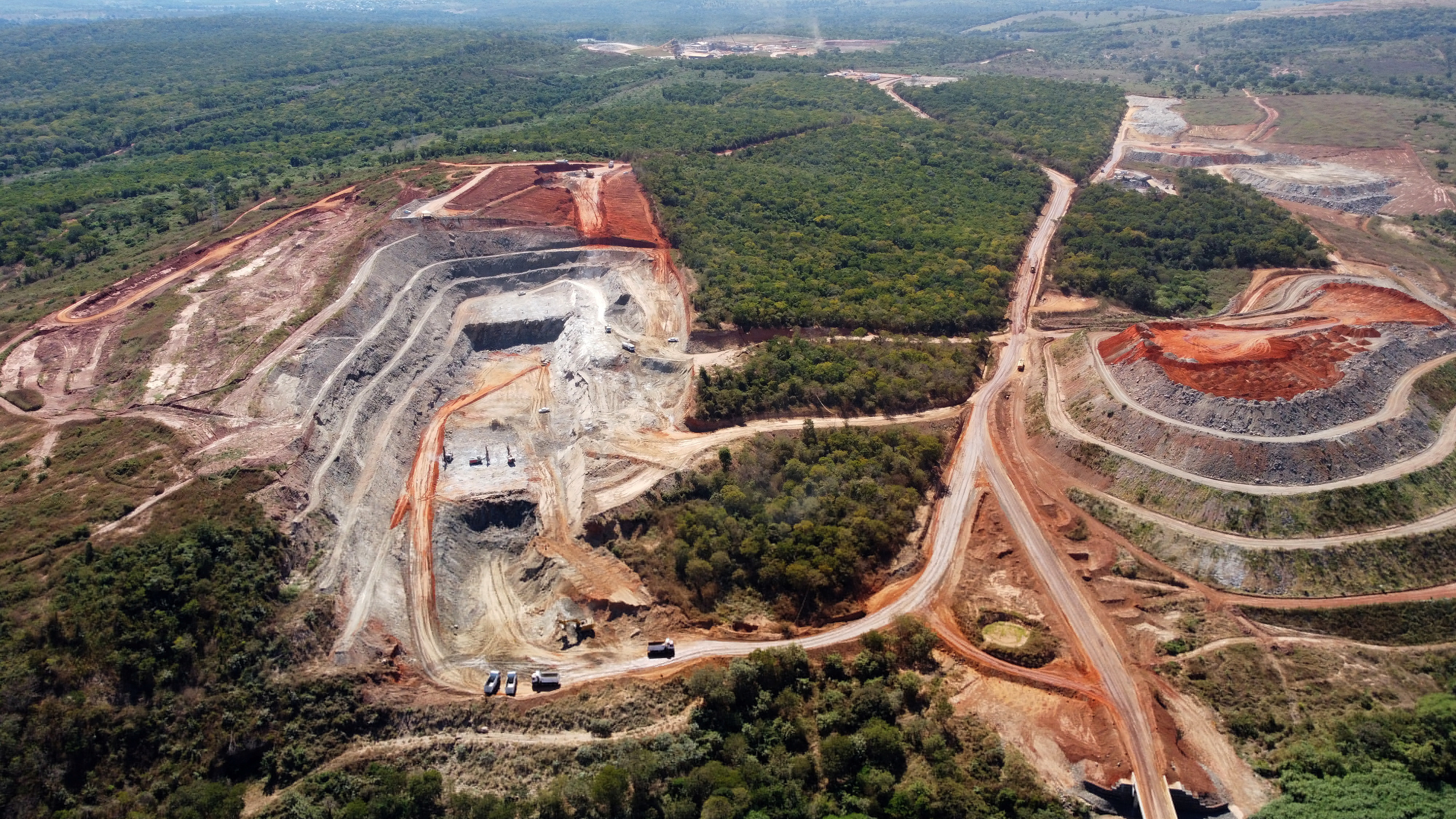
The global critical minerals race has been narrated primarily through an Africa-and-Australia lens. But Brazil — already the world's dominant niobium producer (controlling roughly 90% of global supply) and holder of substantial lithium, rare earth, and graphite deposits — is engineering a deliberate pivot from agricultural commodity exporter to strategic mineral supplier. The Lula government's 2025 National Critical Minerals Strategy signals that Brasília intends to monetise this endowment on its own terms.
The Regulatory Architecture
Unlike the DRC or Ghana, Brazil is not nationalising mines or imposing windfall levies. Instead, it is building an institutional framework designed to attract foreign capital while retaining downstream value. The National Mining Agency (ANM) has streamlined licensing timelines from 18 months to under 8 months for critical mineral projects. Simultaneously, new tax incentives — including a 75% corporate income tax reduction for lithium and rare earth processors operating in the north and northeast — are explicitly conditional on domestic beneficiation.
The message is clear: extraction alone will not secure preferential treatment. Capital that commits to refining, cathode manufacturing, or magnet production will receive fast-track permitting, BNDES financing, and free-trade zone access. Capital that plans to ship raw ore to China will face standard regulatory timelines and no tax concessions.
The Deal Pipeline
The numbers are already moving. Vale's lithium subsidiary has announced a US$1.2 billion expansion of its Grota do Cirilo operation in Minas Gerais — set to become the largest hard-rock lithium mine in the Americas by 2028. Sigma Lithium's Minas Gerais project is shipping 270,000 tonnes of spodumene concentrate annually, primarily to Asian battery manufacturers, though offtake agreements with European gigafactories are now under negotiation.
In rare earths, Serra Verde Resources is developing the only operational ionic clay rare earth mine outside China, targeting 5,000 tonnes of NdPr oxide annually — a volume that would supply approximately 10% of non-Chinese global demand. The US Department of Defense has expressed interest in offtake arrangements, mirroring the DFC's approach in the DRC.
The Niobium Question
Brazil's niobium dominance is often overlooked because the supply chain is already concentrated: CBMM (privately held by the Moreira Salles family) controls roughly 75% of global production from a single mine in Araxá. But niobium's criticality is increasing as steel lightweighting, superconducting magnets, and lithium-niobium battery chemistries expand addressable demand. The question for investors is whether CBMM's quasi-monopoly will attract regulatory scrutiny — or whether Brasília will use it as a bargaining chip in bilateral trade negotiations.
Structural Risks
Brazil is not without friction. Environmental licensing in the Amazon basin remains slow and politically charged — Belo Sun's Volta Grande gold project has been stalled for over a decade by indigenous land rights challenges and IBAMA permitting disputes. The Yanomami crisis of 2023 left the Lula government politically exposed on any mining expansion in indigenous territories, which overlap significantly with rare earth deposits in Roraima and Amazonas states.
Currency volatility is another factor. The real's 18% depreciation against the dollar over 2024-2025 has improved export competitiveness but complicated capital expenditure planning for projects with dollar-denominated equipment imports and real-denominated operating costs. Hedging costs have risen accordingly.
Implications for Cross-Border Capital
For deal structurers and capital allocators, Brazil's critical minerals pivot presents a qualitatively different opportunity from African resource plays. The institutional infrastructure is deeper — Brazil has a functioning mining code, an independent judiciary, and a central bank with credibility. The political risk is lower but not absent: it manifests as regulatory delay and environmental litigation rather than expropriation or contract renegotiation.
The competitive dynamic is also shifting. Chinese capital has been the dominant foreign investor in Brazilian mining for a decade, but the US Inflation Reduction Act's "foreign entity of concern" provisions are creating incentives for Brazilian producers to restructure ownership and offtake away from Chinese counterparties. This is generating a new class of deal flow: partnership restructurings, offtake renegotiations, and JV formations designed to qualify lithium and rare earth supply chains for US and EU subsidy regimes.
Brazil will not replace Africa or Australia in the critical minerals map. But it is positioning itself as the supply chain diversification play that Western governments and their industrial policy frameworks are actively seeking. The capital that moves early — and structures for downstream value capture — will likely capture the most favourable terms.