
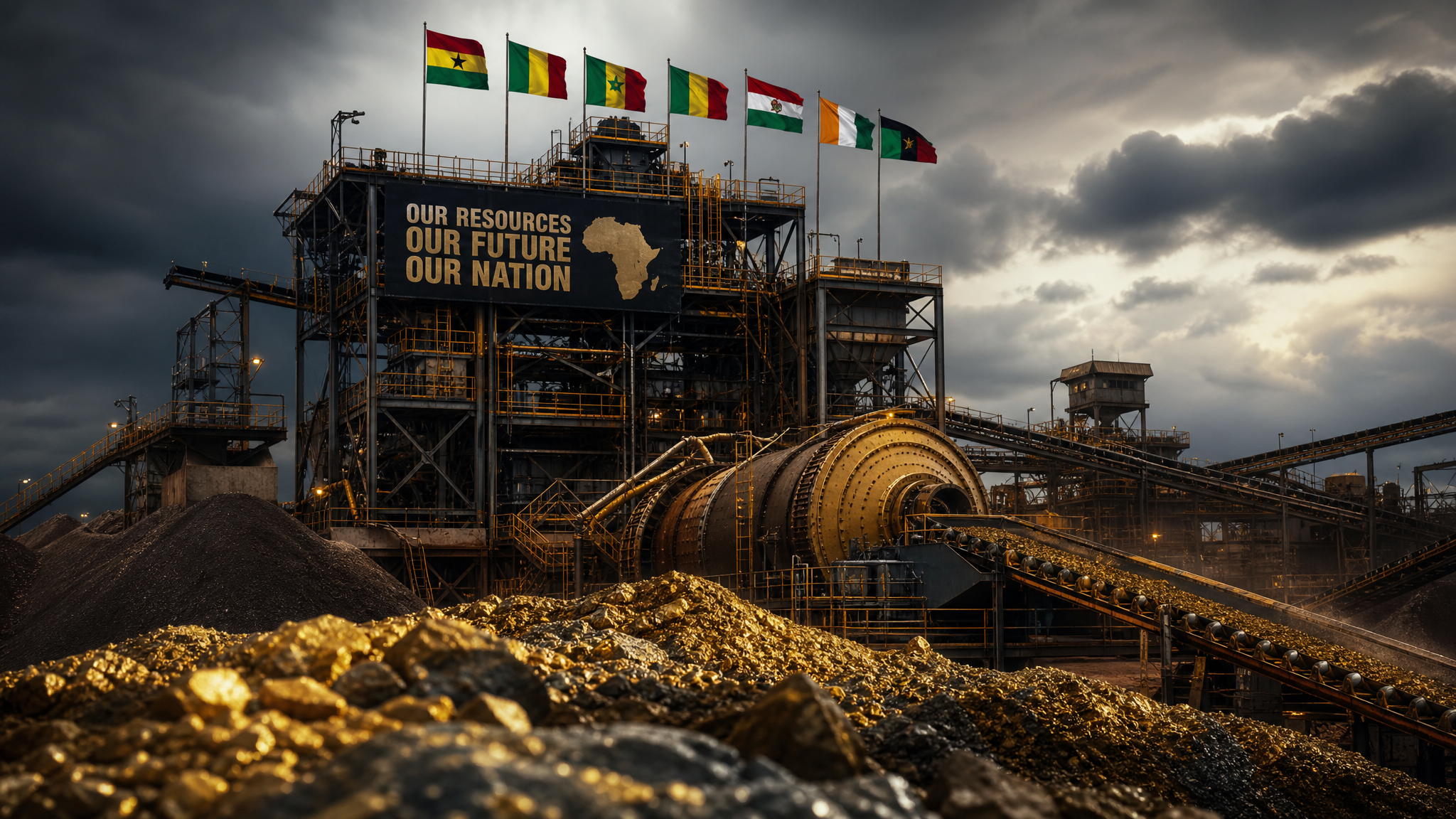
The Fraser Institute's 2025 survey of mining companies ranked several African jurisdictions — Mali, Burkina Faso, Guinea, and the DRC — among the bottom globally for mining policy attractiveness. That ranking is not a bug; it's a feature of deliberate policy design. African governments are systematically rewriting mining codes to capture a larger share of mineral wealth, and the pace of reform in 2026 has accelerated beyond what most international operators anticipated.
The Reform Landscape
The policy instruments vary by jurisdiction, but the direction is uniform:
- Ghana: A two-tiered ownership structure now requires 100% Ghanaian ownership for surface mining and 51% for underground operations, effective December 2026. Sliding-scale royalties of 5–12% are indexed to gold prices.
- Mali: Royalty rates have been raised to 10%, with potential state equity stakes reaching 35%. The Barrick Gold standoff — which resulted in significant production losses for both parties — demonstrated that Mali's government will accept economic pain to enforce its terms.
- Burkina Faso and Zimbabwe: Both have mandated domestic processing of minerals, effectively banning raw ore exports and forcing investment in local beneficiation capacity.
The "Africans for Africa" Model
The most interesting development is not the blunt instruments — royalty hikes and ownership mandates — but the emergence of structured alternatives. The "Africans for Africa" (AFA) initiative, which gained prominence at the 2026 Mining Indaba, promotes a "51% benefit principle": embedding African capital and governance into projects from inception rather than through retroactive policy changes.
The logic is sound. Retroactive reform creates the worst possible incentive structure — it punishes companies that have already deployed capital while doing nothing to improve project quality for new entrants. The AFA model instead proposes that African institutional investors (sovereign wealth funds, pension funds, development banks) take anchor equity positions at project design stage, ensuring alignment between national interest and commercial returns.
Where Capital Is Repositioning
The practical effect of resource nationalism 2.0 is a bifurcation of the African mining investment landscape:
- Tier 1 jurisdictions (Botswana, Namibia, Morocco) are attracting capital displaced from higher-risk markets, benefiting from relatively stable regulatory frameworks.
- High-risk, high-return jurisdictions (DRC, Mali, Guinea) are increasingly the domain of Chinese state-backed operators and specialist frontier funds willing to accept sovereign risk in exchange for off-take security.
- The middle tier (Ghana, Tanzania, Zambia) is where the real action is — these are markets where the policy architecture is evolving rapidly but remains negotiable, and where structured partnerships can still deliver attractive risk-adjusted returns.
The Ghana Mineworkers' Union has already flagged that shifts to contract mining reduce wages and job security — a reminder that resource nationalism creates domestic distributional conflicts, not just international ones. The operators who will thrive in this environment are those who understand that the social licence is now as important as the mining licence.